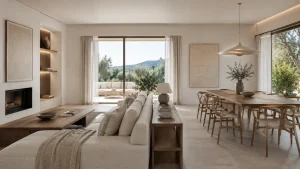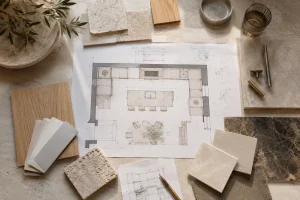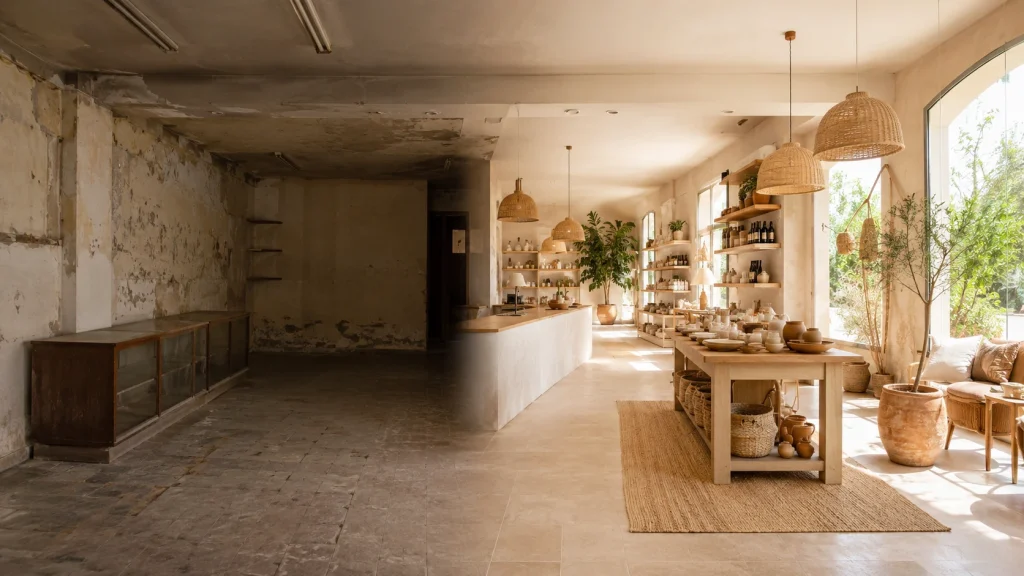
When a commercial premises begin to look outdated, uncomfortable or disconnected from what your business represents today, a logical question appears: Is reforming an expense or an investment?
The answer depends on the approach.
A reform can be an expense if it only serves to cover problems: Paint, change four furniture, fix damage and keep working the same as before. But It can also be an investment if you transform space into a tool capable of attracting more customers, Improve the shopping experience, optimize daily work and reinforce the brand image.
As an interior designer in Mallorca, I often meet business owners who see interior design as purely aesthetic, almost like a luxury. But I always say the same thing: Your place talks about you before you can greet the client. Before you explain who you are, your space is already transmitting trust, carelessness, quality, closeness or professionalism.
Therefore, when we talk about reforming a commercial premises, we should not ask ourselves just how much it costs. The important question is another: What can this reform return to the business?.
When a local reform is spending and when is it an investment
A reform is usually closer to spending when it is limited to repairing, maintaining or replacing deteriorated elements without actually improving the value or operation of the premises.
For example:
- Fix a spot breakdown
- Paint by wear
- Replace a broken element with a similar one
- make small changes without strategy.
These actions may be necessary, but they do not always generate return. They maintain the operational premises, although they do not necessarily make it more profitable.
On the other hand, a reform is closer to the investment when it improves the space clearly: it increases its useful life, reinforces the image of the business, facilitates the work of the team, improves the customer experience or helps to sell better.
For example:
- Redesign the distribution of the premises
- Improve commercial lighting
- Renew outdated installations
- Design custom furniture
- Update the visual identity of the space
- Create a more consistent customer experience
- Improve tours, service areas or product exposure.
The difference is in the intention. It is not the same to reform to “get out of the way” than to reform so that the premises work in favor of the business.
What should you keep in mind at the accounting level?
From an accounting and fiscal point of view, a local reform can be treated differently depending on the type of action. Repairs and maintenance tasks are usually more related to current expenditure. Improvements that increase the value, productive capacity or useful life of the premises tend to be closer to an amortizable investment.
That said, each case must be reviewed with a tax or accounting advisor, especially if we talk about a comprehensive reform, a rented premises or a significant investment.
As a general orientation:
| Type of performance | Example | Usual approach |
|---|---|---|
| Repair | Fix a breakdown or damage | Spending |
| Maintenance | Paint by wear or preserve the current state | Spending |
| Improvement | Redesign space, renovate installations, or increase functionality | Investment |
| Comprehensive transformation | Change distribution, image, experience and operability | Strategic Investment |
If the premises are rented, it is also convenient to review the duration of the contract, the owner’s permissions, the possibility of renewal and the real time you will have to recover that investment.
But beyond the accounting classification, there is a business reading that should not be forgotten: A well-proposed reform should help you work better, sell better or position yourself better.
Why a reform can improve your local billing
A physical location is not just a place where the sale occurs. It is part of the sale.
The customer decides a lot before buying: when he looks at the shop window, when he crosses the door, when he understands the journey, when he feels comfortable, when he perceives quality in the materials or when he notices that the space is designed for him.
A well-crafted design can influence:
- The first impression
- the length of stay
- The perception of value
- the trust
- the average ticket
- the recurrence
- the recommendation.
Therefore, a beautiful space is not enough. It should be nice, yes, but also consistent, functional and profitable.
An obsolete place may be holding back business growth without being obvious to the naked eye. It can make the product seem less valuable, the client does not understand the proposal well, or that the experience does not live up to what you offer.
On an island like Mallorca, where many businesses also compete for environment, experience and differentiation, commercial interior design can become a clear advantage.
It’s not about spending on furniture. It’s about investing in an experience that helps the customer feel better, trust more and come back.
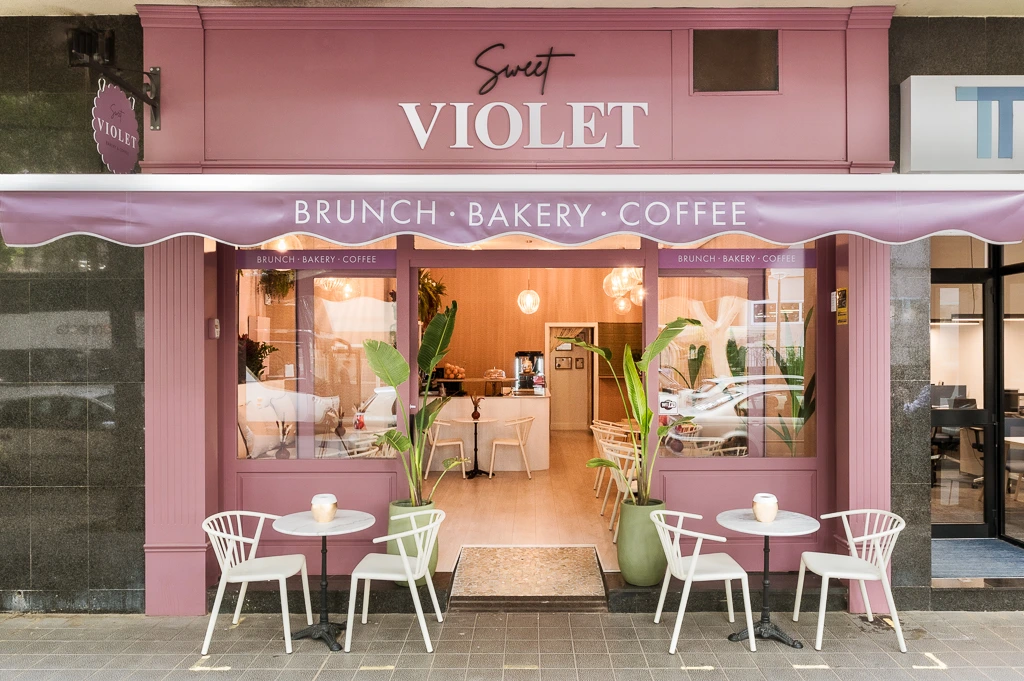
Operability, the return that is often not seen
A profitable reform not only improves what the client sees. It also improves what happens behind.
A poorly distributed place can become a constant money leak: uncomfortable tours, wasted areas, lack of storage, unnecessary movements of the equipment or poorly resolved care points.
When I design custom furniture for a restaurant, a store or a service area, I don’t think only of it fitting into the hole. I think that the team saves steps, the service is more fluid and the local performs to the maximum.
A good distribution can help you:
- reduce work times
- make better use of square meters
- Order service and sale areas
- Improve customer circulation
- facilitate maintenance
- Avoid friction on a day-to-day basis
- improve equipment efficiency.
This type of return does not always appear on an invoice, but it is noticeable every month. A local that works better reduces wear, errors and time loss.
And that is also profitability.
Materials, finishes and durability: where cheap can be expensive
One of the most common mistakes in a commercial premises reform is to choose materials only by price.
I understand the temptation. When there is a budget to take care of, it seems logical to cut. But in a commercial premises the materials do not live as in a private home. They support more traffic, more cleanliness, more shock, more humidity, more use and more daily demand.
I have seen projects that tried to save on materials or expert hands and ended up being a headache at two years old.
That is why I prefer to invest in noble, resistant and well-executed materials rather than putting patches that will have to be changed soon. Durability is also a form of savings.
A suitable material should not only look good on the opening day. It must age with dignity, maintain the aesthetic coherence of the premises and support the real pace of the business.
Also here comes the value of working with artisans and specialized professionals. It is not just an aesthetic or ethical issue. It is a way to protect the investment and give the space a character that is not achieved with generic solutions.
Errors that turn a reform into an unnecessary expense
Not all reforms are good investments. Some start with enthusiasm and end in extra costs, delays and improvised decisions.
These are the most common mistakes:
- Reform without strategy
- Copy trends without thinking about the business
- Save on what the project holds
- Don’t plan the times well
- Leave too many decisions for the work
Why Turnkey Focus Protects Your Investment
Many local owners delay the reform because the work scares them: guilds, decisions, purchases, permits, deadlines, calls, contingencies and changing budgets.
Therefore, a project Turnkey It makes so much sense when we talk about trade reforms.
A comprehensive approach allows:
- Reduce improvisations
- better control the budget
- Coordinate suppliers and unions
- Make decisions before you start
- Shorten closing times
- Avoid duplication
- Maintain a global vision of the result.
For an entrepreneur, time is one of the most valuable assets. If the reform is managed professionally, many of those delays are avoided that turn an illusion into a financial nightmare.
The reform should bring you closer to a better place, not to get away from your business for months.
How to know if your premises need a strategic reform
If you have a commercial premises in Mallorca and you feel that the space has been left behind, these questions can help you:
- Does my location represent the current stage of my business?
- Does the first impression convey confidence?
- Does the customer understand quickly what I offer?
- Does the distribution make it easy to buy or make it difficult?
- Does my team work comfortably?
- Am I taking advantage of the square meters well?
- Do current materials convey quality?
- Does the space invite you to stay?
- Does lighting help sell?
- Does the local differ from the competition?
If several answers are negative, you may need a strategy designed with strategy.
Before requesting quotes without a clear direction, start by understanding what your commercial space truly needs.
A phase of analysis and planning can help you decide which investment makes sense, how to organise the renovation and which decisions can turn your space into a real tool for your business. You can also find inspiration in examples of renovated commercial spaces where design is understood as a business tool.
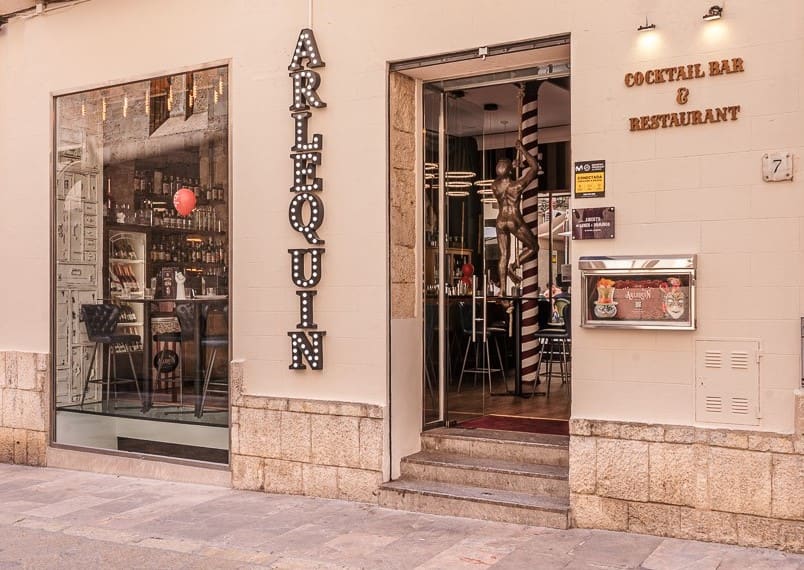
Reforming your premises can be the investment that activates a new stage
A local reform can be spending or investment. We have already seen it. It will be spending if it only covers problems, responds to improvised decisions or is limited to make up a space that still does not work.
But it will be an investment if it improves the customer experience, updates the image of the business, optimizes operation, increases the perception of value and helps the local bill better.
If your space has become obsolete, perhaps the most important question is:
How much is it costing me to continue working in a place that no longer represents my business?
Do you want to know how to turn your commercial space into a profitable investment?
Book an advisory session and let’s design the strategic plan for your space.
Book an advisory sessionFrequently Asked Questions
What should I analyze before asking for a quote to reform my premises?
Before asking for a quote, it is advisable to analyze what is failing in the current premises: image, distribution, lighting, customer experience, wasted areas, team tours and coherence with the brand. If you do not make this previous diagnosis, it is easy to compare budgets that do not respond to the same objective.
When is it better to make a complete reform instead of small changes?
A complete reform usually makes more sense when the problem is not in an isolated element, but in the whole: outdated image, poor distribution, deteriorated materials, little-cared lighting and a customer experience that no longer accompanies the business. In those cases, making small changes can lengthen the problem and end up being more expensive.
How can I reduce the time my premises remain closed during the renovation?
The best way is to get to the work with the well-defined project: distribution, materials, furniture, suppliers, deadlines and key decisions. The less you improvise during execution, the easier it will be to control times and avoid stoppages.
What role does lighting play in the profitability of a local?
Lighting directly influences how space, product and environment are perceived. Poorly designed lighting can make a place look cold, uncomfortable, or uncared for. Good lighting guides the look, creates atmosphere, reinforces important areas and improves the shopping experience.
Does it make sense to invest in custom furniture for a commercial premises?
Yes, when custom furniture meets specific needs: make better use of space, improve storage, order tours, reinforce the identity of the business or facilitate the work of the team. It is not about doing everything to measure, but about using it where it adds real value.
How do I know if my local is streaming an outdated image?
Some signs are: clients who do not understand your proposal well, unattractive showcase, worn materials, decoration disconnected from your current brand, uncomfortable distribution or feeling that your business offers more value than the space communicates. In those cases, the problem is not only aesthetic: it can be affecting perception and sale.