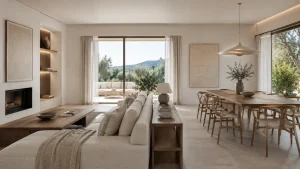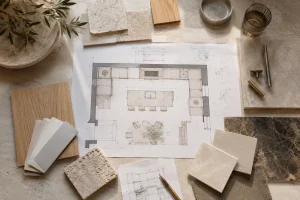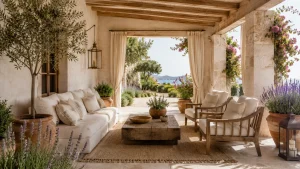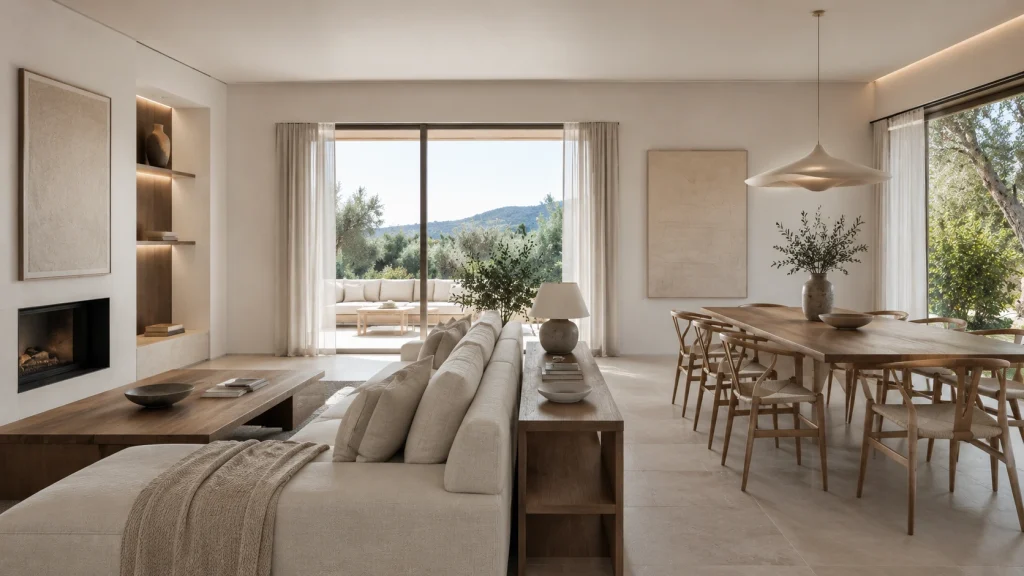
Open spaces have a special capacity to transmit amplitude, luminosity and freedom. On many floors of the center of Palma and in numerous Mallorcan houses, the living room, the dining room and the kitchen share the same room. This distribution can be very attractive, although with daily use it can also generate a certain feeling of disorder.
When several activities coexist without clear limits, the gaze jumps from one area to another. The dining room mixes with the work corner, the sofa seems to float in the middle of the room and the entrance is integrated into the living room without any type of transition. The space is still wide, but it loses serenity and it is more difficult to understand how to use it.
In my experience, dividing spaces with furniture is one of the most practical ways to recover that order without immediately resorting to a reform. An open shelf, a sideboard, a well-oriented sofa or a custom designed piece can mark the limits between two rooms and improve the way the room is traveled.
The key is to observe the space as a whole. Light, circulation, proportions and daily activities must coexist in a balanced way. When all these elements are taken into account, the separator cabinet provides privacy and organization without subtracting amplitude.
How to order a diaphanous space without getting into works
An open stay can bring together many functions. In it we have breakfast, we receive visits, we rest, we work and, in some cases, we serve clients. This versatility is comfortable, but it can also produce visual noise when each activity invades the space of the others.
Dividing the environment allows you to create a clearer structure. The objective is to mark zones without breaking the continuity that makes the space attractive. A partial separation may be enough for the living room to be more welcoming, the dining room gains identity or the teleworking area is slightly protected.
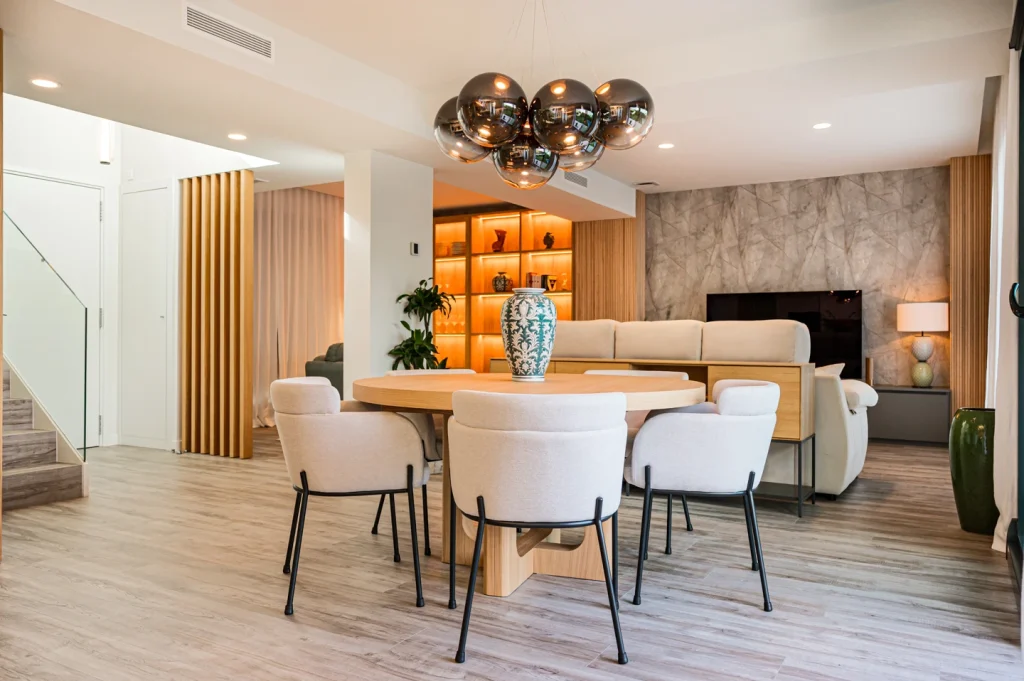
Why an open environment can feel chaotic
Visual chaos usually appears when furniture is placed independently, without a clear relationship between them. There may be beautiful and good quality pieces, but the stay continues to feel messy because each element seems to respond to a different need.
It also influences the number of objects that are visible. On an open floor plan, the kitchen, the table, the sofa, the desk and the storage areas can be seen at the same time. The look receives too much information and the environment loses calm.
A well-posed division introduces pauses. It allows you to partially hide some areas, direct attention to others and create more intuitive routes. This improvement is perceived even when the separation occupies a few centimeters.
What changes when each zone has a well-defined function
When the space is organized by functions, the daily activities flow more naturally. The dining room stops feeling like an accidental extension of the room. The work area finds its place and it is easier to disconnect at the end of the day. The entrance stops directly on the sofa and acquires a small transition.
Many times we start by trying the orientation of the sofa or moving a console. That simple movement helps identify what the stay needs. In some cases, it is enough to reposition what exists. In others, the space asks for a piece that better relates the different areas.
Delimitation also improves the feeling of intimacy. One person can work while another rests, and both activities maintain a certain independence even if they share the same room.
Visual intimacy without closing the passage of natural light
Light has a central role in any interior design project and that is especially important in Mallorca. The houses usually take advantage of intense clarity for a good part of the year, so any separation must respect its journey.
Open shelves, low furniture, and lightweight structures allow you to filter views while the light continues to pass through the room. You can also work with gaps, slats, partial bottoms and height changes.
The opening level will depend on the use. Between the living room and the dining room a very subtle separation can work. A rest area within a studio may require a little more privacy. In a restaurant, it is convenient to delimit groups of tables without creating dark corners or hindering the work of the team.
What to observe before separating environments with furniture
Before choosing a piece, it is advisable to analyze how space is used for a full day. The location that seems ideal at first sight can block a path, reduce light input, or make it difficult to open a drawer.
The decision should consider both aesthetics and everyday use. A dividing cabinet occupies a strategic place and is usually seen from various angles. Its size, its finishes and its relationship with the rest of the interior have an important influence on the result.
Daily circulation within the home or business
The main courses must remain clear. It is advisable to observe where we enter, how we get to the sofa, which way we go to the kitchen and how much space we need around the table.
In a home, a narrow passage can become uncomfortable over time. In a restaurant location, the circulation has even more weight because it must work for customers and personnel at the same time.
The furniture can help direct these movements. A console marks the entrance, an island organizes access to the kitchen and a shelf directs the route towards a specific area. To achieve this, there must be enough distance between the piece and the other elements.
The relationship between furniture and existing architecture
The furniture works best when it seems to belong to the space. Materials, lines and colors should be related to the floor, carpentry, lighting and existing pieces.
In a Mallorcan house, a warm wood, a mineral texture or a handmade finish, they can accompany the architecture without competing with it. In an urban floor, a lighter composition can retain the feeling of spaciousness and order.
This integration requires sensitivity. The objective is to get the furniture to organize the room naturally and maintain the personality of the place.
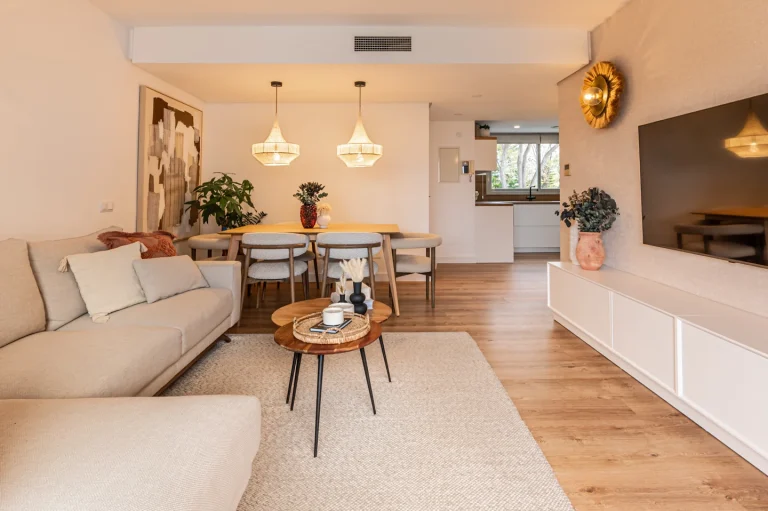
Furniture that helps to divide spaces in a simple way
Many everyday furniture can function as separators. The choice depends on the size of the environment, the available light and the type of limit we want to create.
An open shelf to filter views lightly
The open shelf is one of the most versatile options. It allows to separate two zones and maintain a visual connection between them. It also offers space for books, ceramics, plants and objects that provide warmth.
It should be avoided overfilling. When all the holes are occupied, the piece loses lightness and can block more light than expected. A balanced composition combines empty spaces with selected objects.
Stability deserves special attention. High shelves must have a safe structure and, when necessary, with suitable fixing systems.
The placement of the furniture can also help you organize an open plan without visually reducing the room. In this guide I explain How to divide spaces with furniture without losing light, spaciousness or style.
The sofa as a limit between the living room and the dining room
The back of the sofa can clearly mark the end of the living room. This solution works especially well when the room is rectangular and the dining room is located behind.
A narrow console placed next to the backrest helps complete the transition. You can also incorporate lighting, space for small objects or a fulcrum near the dining room.
Before moving the sofa, it is advisable to check the relationship with the television, the windows and the passage areas. The new orientation should improve the set and maintain comfortable circulation.
Sideboards and low furniture to order without recharging
The sideboards create a subtle separation and offer a great storage capacity. Its low height allows the views and the passage of light to be preserved, so they work well between the living room and the dining room.
In the dining area you can store dishes, table linen and glassware. Towards the room they can integrate books, audiovisual equipment or small objects. When the furniture is designed to be viewed from both sides, each face can respond to a different function.
A console to mark the entrance or a step zone
In many homes, the front door opens directly into the living room. A console can create a light receiver and provide a feeling of arrival.
The piece can be accompanied by a lamp, a mirror or a graphic work. You can also integrate a drawer for keys and small items. Its reduced depth makes it a suitable solution for urban floors.
Islands and bars to organize open kitchens
Islands and peninsulas help separate the kitchen from the living area. In addition to marking the limit, they offer work surface, storage and a place to have breakfast or talk.
The distance around the piece must allow doors and drawers to be opened without interference. You also have to study the location of the facilities, the lighting and the relationship with the dining table.
When the kitchen has unusual dimensions, a custom designed island can make better use of the space and maintain a suitable proportion.
Desks that integrate a work area at home
Teleworking has turned many bedrooms and living rooms into multifunctional spaces. A desk can act as a boundary between the work area and the rest of the room.
A composition with shelves, panels or storage helps keep the material organized. The location should take advantage of natural light and avoid annoying reflections on the screen.
It is also important to think about how the desk is perceived outside working hours. A well-integrated solution allows the space to recover its domestic atmosphere at the end of the day.
TV furniture that works from both sides
A television cabinet can occupy a central position and separate the living room from the dining room, from an entrance or from a work area. Wiring management and equipment ventilation must be resolved from the start.
The back needs a careful design. It can incorporate shelves, a small sideboard or a decorative surface. In this way, the furniture maintains interest from all angles.
When a conventional furniture can fall short
The furniture available on the market offers many possibilities and can solve numerous situations. However, some distributions require greater precision.
Standard measurements can leave unused spaces, hinder circulation, or create an unbalanced proportion. They can also feature unfinished backs, very visible sides or storage combinations that do not meet the actual needs.
When the measurements are complex, the custom furniture allows you to take advantage of corners that a conventional piece would leave unresolved. In addition, it offers the possibility of designing each face according to the environment to which it is oriented.
A library can incorporate books into the living room and crockery into the dining room. An entrance cabinet can store shoes on one side and become a sideboard on the other. A piece located between the bedroom and the dressing room can integrate storage, lighting and a small support area.
The value of custom furniture to divide environments
The custom furniture allows you to work with the real proportions of the room. Each height, bottom and opening can respond to a specific need.
This level of precision improves the use of square meters and helps maintain a cleaner image. It also allows to integrate plugs, lighting, wiring, opening systems and technical elements with discretion.
One of the most interesting applications of personalized furniture appears in open spaces, where a piece can provide storage and delimit several functions at the same time. You can see some examples in this guide on Furniture to separate environments without doing works.
When standard furniture does not quite fit, a bespoke design can completely transform the space
A piece designed specifically for your home or business can divide different areas, improve circulation, add storage and preserve the flow of natural light. At Virginia Pérez Interiorismo, we study every proportion, material and detail to create furniture that blends naturally with the architecture and responds to the way you live or work.
Bugs that can make space look smaller or messy
One of the most frequent mistakes is to choose a piece by its appearance without checking its scale. Too big a piece of furniture can dominate the room and reduce freedom of movement.
It is also common to block a light source or place a shelf so full that it ends up working like an opaque wall. The composition needs visual rest spaces.
The back deserves the same care as the front. When it is visible, an incomplete finish can give an impromptu feel. Cables, fittings and fixing systems must also be properly integrated.
Another error appears when dividing in excess. Each zone needs an identity, although the set must continue to maintain a certain continuity. Too many barriers can fragment the room and make it difficult to use.
Security is equally important. Tall and narrow furniture requires stability. In homes with children or pets, this aspect should be studied with special attention.
How to make the furniture look like a natural part of the space
Integration begins with proportion. The piece must have a sufficient presence to organize the room and, at the same time, let the architecture breathe.
The materials can repeat tones of the floor, a carpentry or other furniture. This connection generates consistency without the need to use exactly the same finish throughout the room.
When the separator has two faces, each can relate to its zone. Towards the living room can show books and decorative objects. Towards the dining room can incorporate closed storage. The common structure maintains unity.
Lighting adds depth and makes it easier to use. An integrated light can highlight a texture, accompany a reading area or provide a more intimate atmosphere at night.
It is also convenient to think about the evolution of space. A modular composition or a piece prepared to change use can accompany new needs over time.
What solution can work best in each case
This comparison serves as a starting point. The final choice must be adjusted to the measurements, the orientation of the light and the way in which each room is used.
Frequently asked questions about how to divide spaces with furniture
Which solution works best in a small stay
Narrow, low, multifunctional furniture usually offers good results. It is advisable to prioritize pieces that provide storage and keep the routes clear.
How to integrate a telecommuting area in the bedroom
A compact desk can be separated by a light shelf or a panel with storage. It is also useful to have closed elements that allow the material to be stored at the end of the day.
How much space should be left to circulate
The distance depends on the use and the nearby furniture. The step should allow you to move comfortably and open doors, drawers and chairs without interference. In a custom project, these measurements are studied according to the actual tours.
When does it compensate to order a custom furniture
It is especially useful in irregular plants, small spaces, houses with unique architectural elements and environments that need storage from both sides.
How to divide a restaurant without visually reducing the premises
Light separations, plant compositions and medium-height furniture help organize tables. They should also maintain good visibility and facilitate service.
Does your space need more than simply moving the furniture around?
Adding a shelving unit or changing the position of the sofa can be a good starting point. When different areas overlap, storage is lacking or the layout does not flow naturally, a professional perspective can help you find a more balanced and lasting solution.
At Virginia Pérez Interiorismo, we can study your home or business and help you organise each area without sacrificing light, spaciousness or character. Tell us which part of your space is proving difficult, and we will explore the best way to transform it with you.